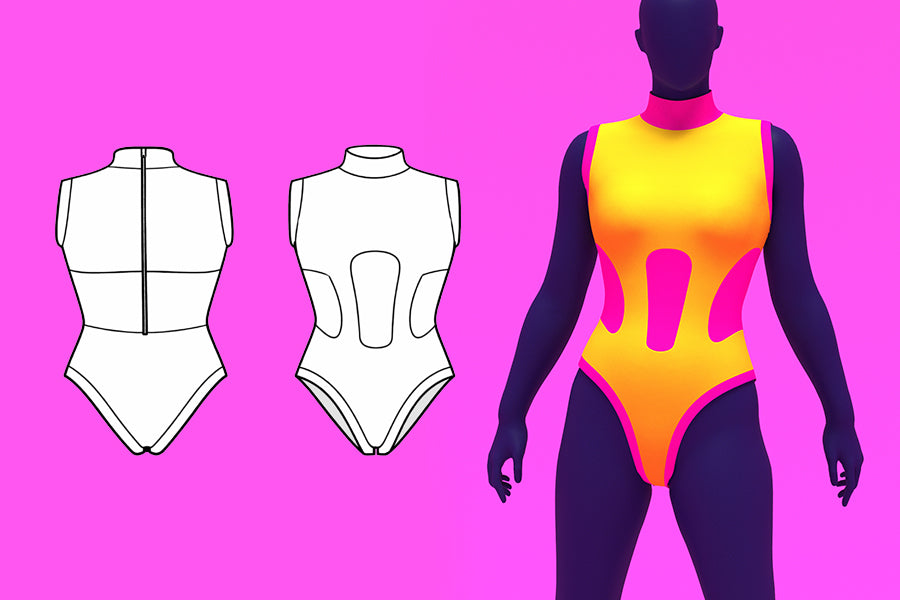
How to Sew a Color Block Sleeveless Nina Leotard
Jump to InstructionsOverview
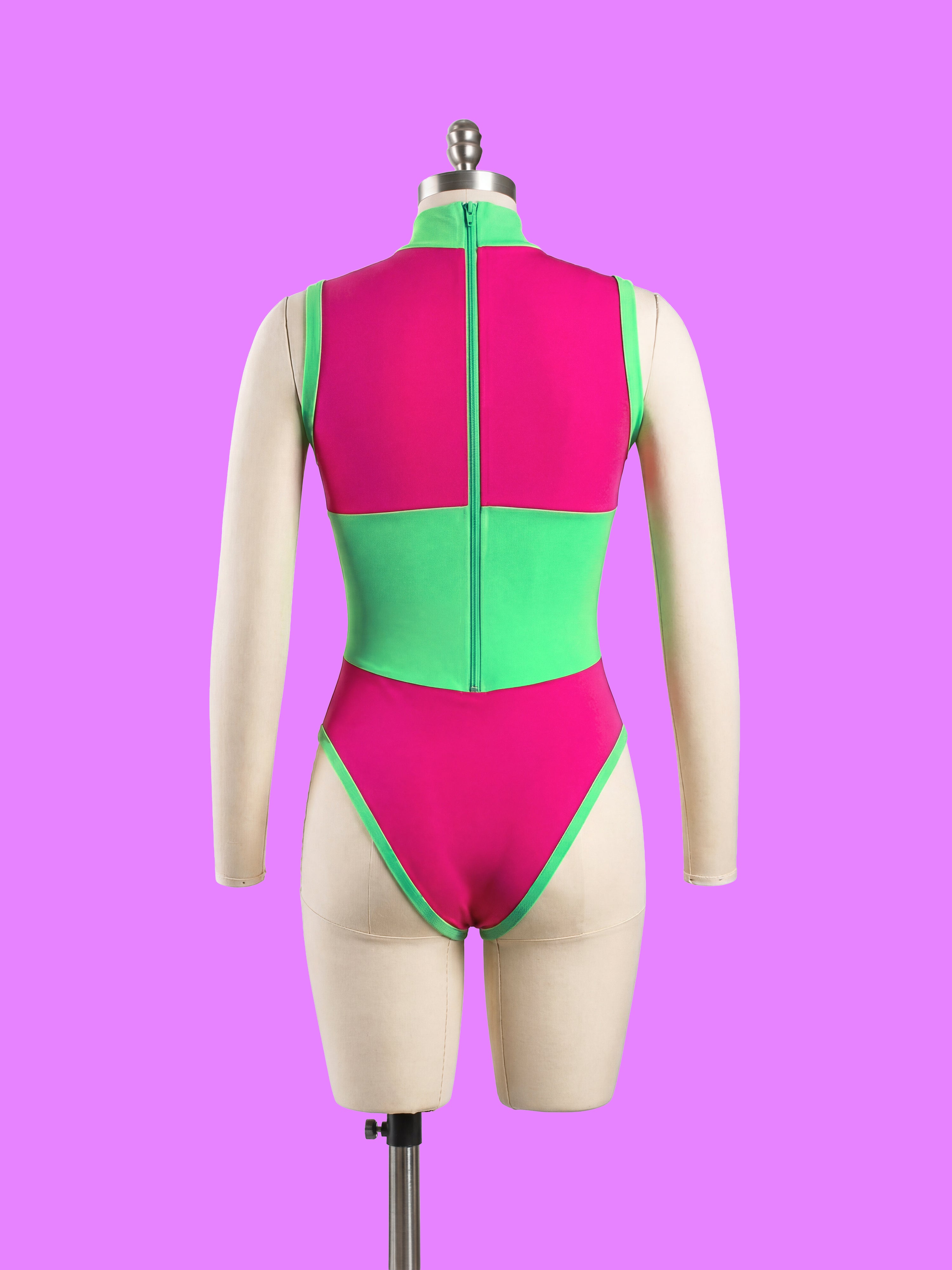
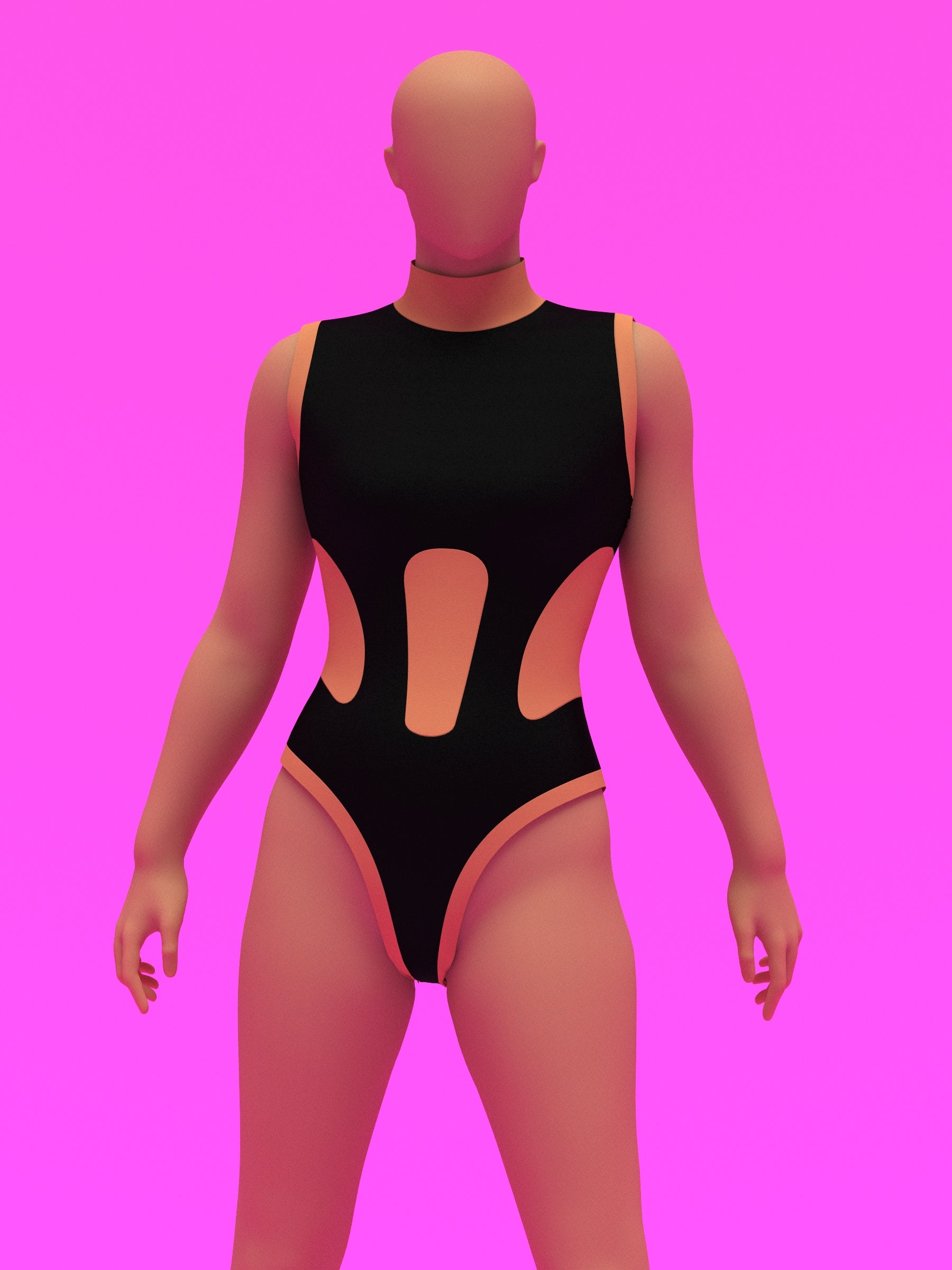
Learn how to sew our cut-out, color-block sleeveless Nina leotard for drag queens. Follow step by step instructions for constructing the cut-outs, collar and center back zipper, attaching the armhole and leg trim. Designed for four way stretch fabrics only and approachable for beginners ready to level up their stage looks.
Fabric Yardage
The fabric yardage below is based on stretch fabric bolt widths of 54" or wider. Fabric A is used for the main body of the leotard, while Fabric B is used for the cut-outs, trim, and collar. If you prefer to use the same fabric for the main body, collar, and trim, combine the Fabric A column with the Fabric Collar and Trim columns. Mix and match as desired.

Drag Queen Sizes
| Size | Fabric A | Fabric B | Fabric Collar & Trim |
|---|---|---|---|
| XS | 1y | 0.5y | 0.25y |
| S | 1y | 0.5y | 0.25y |
| M | 1y | 0.5y | 0.25y |
| L | 1y | 0.5y | 0.5y |
| XL | 1y | 0.5y | 0.5y |
| 2XL | 1y | 0.5y | 0.5y |
Fabric & Notions
Fabric
- Four way stretch fabrics only, such as Spandex, Lycra, Milliskin Tricot, and Power Mesh.
Notions
- 22-24" invisible zipper, for back closure.
- Tear-away Stabilizer for Zipper.
Sizing Details
This pattern is drafted in our exclusive drag queen sizes from XS to 2XL, created to fit padded bodies with broader shoulders, arms, and legs. While this pattern is made with drag performers in mind, it can be worn by any gender who matches the size measurements provided below.
Drag Queen Sizing
If you’re doing drag, be sure to measure yourself with your padding on for the bust and hips. Look for your natural waist measurement in the size charts below to choose the correct size. Wrap the measuring tape snugly around your body—it should feel not too loose or too tight.
| Size | Mens Chest | Drag Chest (Padded) | Mens Waist | Drag Waist (Corseted) | Mens Hip | Drag Hip (Padded) | Height |
|---|---|---|---|---|---|---|---|
| XS | 33-35 | 36-38 | 27.5-29.5 | 24.5-26.5 | 32.5-34.5 | 38-40 | 70 |
| S | 35-37 | 38-40 | 29.5-31.5 | 26.5-28.5 | 34.5-36.5 | 40-42 | 70 |
| M | 39-41 | 42-44 | 33.5-35.5 | 30.5-32.5 | 38.5-40.5 | 44-46 | 70 |
| L | 43-45 | 46-48 | 37.5-39.5 | 34.5-36.5 | 42-44 | 47.5-49.5 | 70 |
| XL | 47-49 | 50-52 | 42.5-44.5 | 39.5-41.5 | 45-47 | 50.5-52.5 | 70 |
| 2XL | 51-53 | 55-57 | 47.5-49.5 | 44.5-46.5 | 48-50 | 54.5-56.5 | 70 |
Sewing Instructions
Color Guide

About Pattern
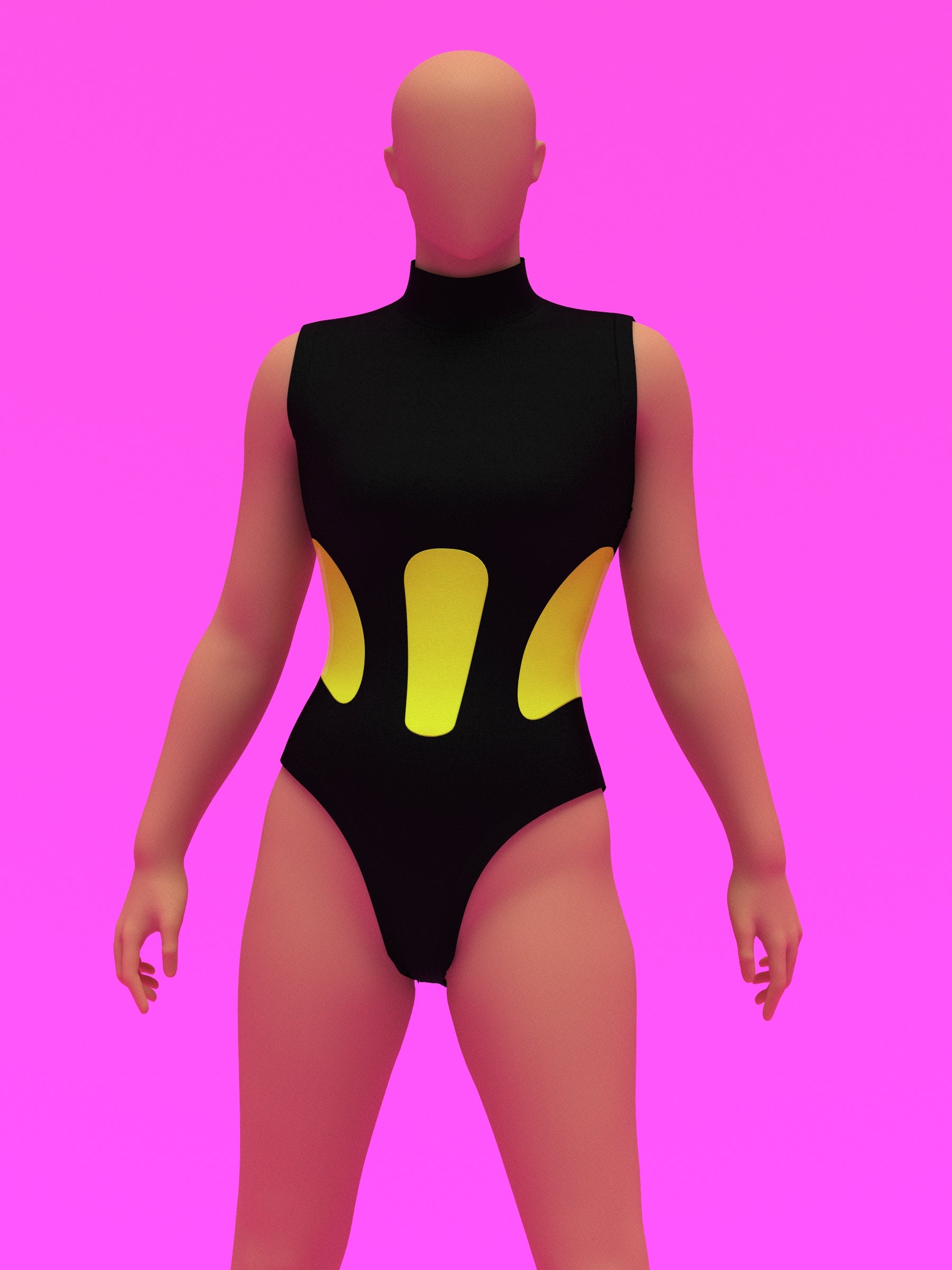
This pattern is a four-way stretch sleeveless leotard designed for bold stage presence, perfect for drag queens. The design features cutout color-block sections that can be removed or used for nude color fabrics or multicolor designs. It includes a tight-fitting body, collar, armhole and leg hole trim, and a center back zipper.
Fabric Pieces
This pattern includes 9 paper pattern pieces. Use these pieces to cut your fabric before starting construction.
Piece 1, the front of the leotard, is cut on a folded fabric layer.
Piece 2, the center front of the leotard, is cut one.
Piece 3, the front sides of the leotard. Cut two of them mirrored.
Piece 4, the upper back of the leotard. Cut two of them mirrored.
Piece 5, the middle back of the leotard. Cut two of them mirrored.
Piece 6, the lower back of the leotard, is cut one on a folded fabric layer.
Piece 7, the collar, is cut one on a folded fabric layer. Piece 8, the arm hole trims, are cut on a folded fabric layer. Cut two in four way stretch fabric.
Piece 9, the leg hole trims, are cut on a folded fabric layer. Cut two in four way stretch fabric.

Stretch Stitches
Sew the seams using a stretch stitch. A lightning bolt stitch is preferred, or use a small zigzag stitch. Sew with a 1/2 inch seam allowance.
Once stitched, finish the raw edges on the wrong side using an overlock machine to serge and trim the seam allowance cleanly.

Assembling the Front
Take the 1, 2, and 3 front pieces and pin the edges together, use many pins, with the right sides of the fabrics facing. Sew the seams using a stretch stitch first. A lightning bolt stitch is preferred, or use a small zigzag stitch, with a 1/2 inch seam allowance. Then finish the raw edges on the wrong side using an overlock machine to serge the seam allowance. This will make up the complete front panel of the leotard.

Assembling the Back
Take the 4 and 5 pieces and pin the edges together, right sides facing, along the back bust line. Sew the seam using a stretch stitch first. A lightning bolt stitch is preferred, or use a small zigzag stitch, with a 1/2 inch seam allowance. Then finish the raw edges on the wrong side using an overlock machine to serge the seam allowance. Repeat with the other side.

Sewing the Front and Back
Take the assembled front and back panels. Place them right sides facing each other and align the shoulder edges.
Sew the shoulder seams using a stretch stitch. A lightning bolt stitch is preferred, or use a small zigzag stitch. Sew with a 1/2 inch seam allowance.
Once stitched, finish the raw edges together on the wrong side using an overlock machine to serge the seam allowance.

Preparing and Attaching the Collar
Take the collar. Fold it lengthwise in half along the fold line with the wrong sides facing each other. Match the raw edges and pin along the fold to keep it in place.

Turn the leotard body right side out. With the collar still folded, position it upside down so the raw edges of the collar align with the neckline. The right side of the collar should face the right side of the leotard.
Begin pinning at the center back slit and continue around the neckline. The collar notch should align with the shoulder seam. The folded edge that was cut on fold should sit at the center front of the leotard.
Pin the collar evenly around the entire neckline. Sew through both collar layers and the neckline using a stretch stitch, preferably a lightning bolt or small zigzag, with a 1/2 inch seam allowance. Then finish the raw edge with a serger on the wrong side.

Installing the Zipper
Use a 20 to 24 inch zipper for the center back. An invisible zipper is recommended, but a regular zipper may also be used. Follow the specific instructions for your zipper type.
With the leotard right side out, place one side of the zipper right sides together with one side of the center back opening, starting at the collar edge. The top of the zipper tape should align with the collar fold. Fold the excess zipper tape at the top inward so it is cleanly finished at the collar.
Sew from the collar down to the end of the slit using a straight stitch. Keep the stitching close to the zipper teeth, depending on your zipper type.
If desired, place a strip of tearaway stabilizer between the zipper tape and the fabric before sewing. This helps prevent rippling. After stitching, gently tear away any excess stabilizer.
Repeat the same steps for the opposite side of the zipper, aligning the top edges evenly at the collar and sewing down to the base of the opening.

Once installed, the excess zipper tape should lie flat on the wrong side of the garment. You may topstitch the sides of the zipper and along each side of the zipper opening for added security and a clean finish.

Attach lower back piece 6 to the lower part of the back piece that has the zipper. Sew them right sides facing each other using a stretch stitch, preferably a lightning bolt or small zigzag, with a 1/2 inch seam allowance. Then finish the raw edge with a serger on the wrong side.
Be careful when sewing over the zipper. Alternatively, avoid sewing over the zipper tail by flipping it upwards. Then trim any excess once it’s sewn.
This completes your entire back piece.

Closing the Body
Once the zipper is installed, turn the garment wrong side out.
Align the front and back side seams. Sew from the underarm down to the leg opening using a stretch stitch, then finish the raw edges together with a serger.
After the side seams are complete, align the front and back crotch edges. Sew along the crotch curve using a stretch stitch, then serge the raw edges.

Attaching the Leg Hole Trim
Take pieces 8 & 9, the arm hole and leg home trim. For each trim, fold it widthwise with right sides facing each other and sew the short ends together to create a continuous loop.

Next, fold the loop lengthwise with wrong sides facing each other, aligning the raw edges. Pin the raw edges together to keep the fold in place.
Locate the seam where the trim ends were sewn together. Match this seam to the point where the front and back crotch seams meet on the leotard, and the side seam of the armhole. With right sides together, pin the raw edges of the trim to the leg opening, distributing evenly around the entire curve.
Sew the trim to the arm and leg openings using a stretch stitch, keeping the folded edge facing inward toward the garment. After stitching, serge the raw edges together to finish.

Repeat the same process for the opposite arm and leg opening. Turn the garment right side and your leotard is finished.
Get the Pattern