
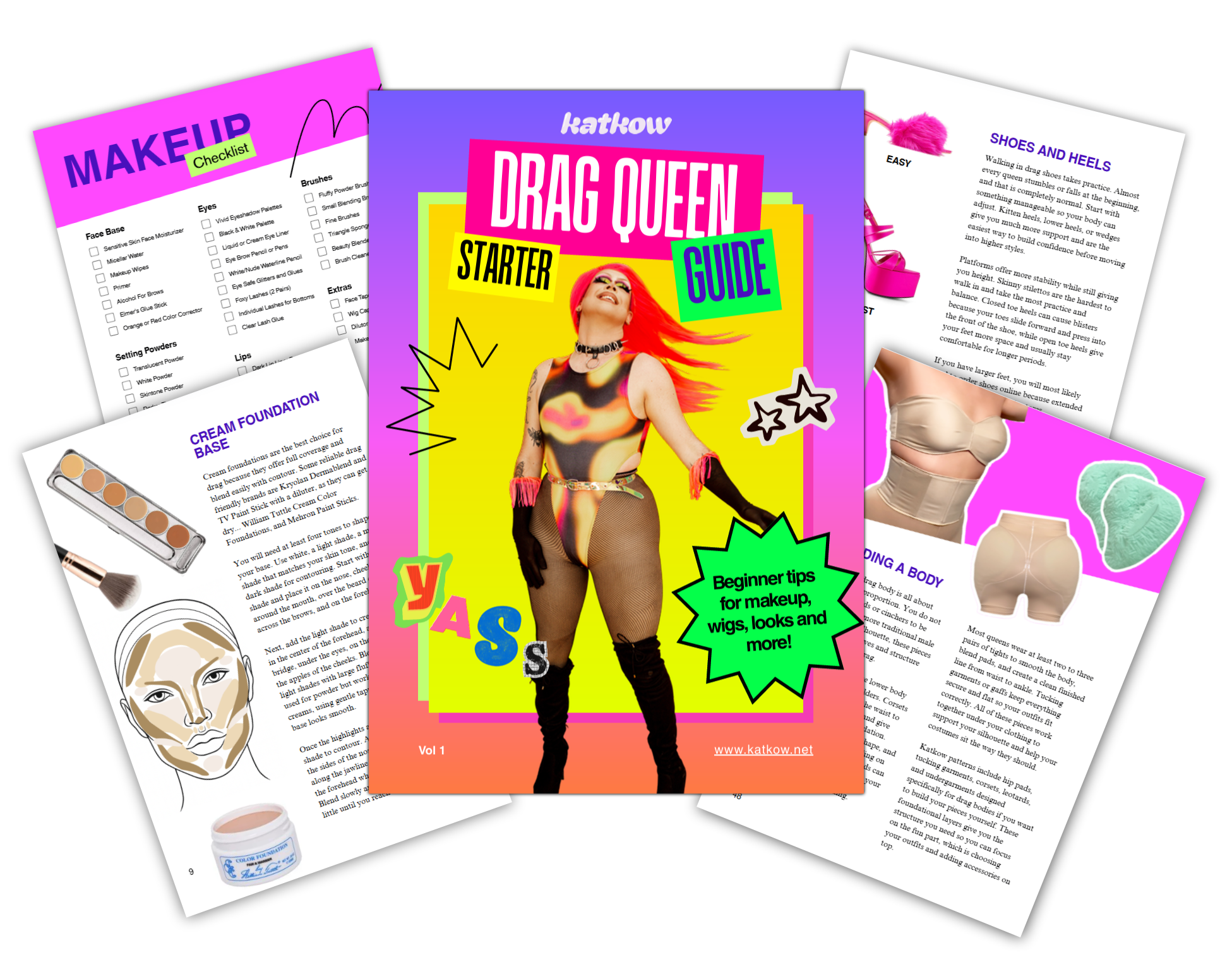
Welcome to Katkow Sewing Patterns
New to sewing? New to drag? Ready to create your first costume? You're in the right place.
Katkow Patterns specializes in digital downloadable PDF sewing patterns designed for drag artists, performers, cosplayers, and anyone looking to create custom garments. Whether you've never touched a sewing machine before or you're returning to sewing after years away, this guide will help you understand where to begin.
Sewing can seem overwhelming at first, but every experienced sewist started exactly where you are now.
What Is a PDF Sewing Pattern?
All of our patterns are delivered digitally as PDF files. After purchase, you'll receive downloadable files that you can save to your computer and print yourself.
Our patterns include:
- A0 PDF Files
- A4 PDF Files
- US Letter PDF Files
You can choose the format that works best for your printer and location.
Printing Your Sewing Pattern
Most beginners choose to print the A4 or US Letter versions at home. After printing, the pages must be assembled by matching the markings and taping the sheets together. Once assembled, you'll have full-size paper pattern pieces ready to use.
We provide guides to help you print PDF sewing patterns accurately at home.
- How to Print PDF Sewing Patterns at Home
- How to Assemble Pages
- Video Tutorial: Printing and Assembling PDF Patterns
Understanding Your Pattern Pieces
After assembling your pattern, you'll cut out the paper pieces and use them as templates for cutting your fabric.
Pattern pieces contain important information such as:
- Grainlines
- Notches
- Piece names
- Size markings
- Cutting instructions
You'll often see instructions such as:
- Cut 1
- Cut 2
- Cut 4
- Cut on Fold
- Mirror Image
These markings tell you how many fabric pieces to cut and how the fabric should be positioned. If you're unfamiliar with sewing patterns, we recommend watching a few beginner sewing videos before starting your first project.
Video Playlist: Sewing Tutorials For Beginners
Choosing Your First Sewing Project
If you're completely new to sewing, we strongly recommend starting with stretch fabrics.
Stretch fabrics are generally more forgiving than woven fabrics because they allow movement and flexibility. Woven garments often require more precise fitting and construction techniques, making them better suited for intermediate sewists.
Great beginner projects include:
- Stretch leotards
- Stretch dresses
- Basic bodysuits
- Simple performance garments
Video Playlist: First Time Sewing Projects
Understanding Sizing and Fit
One of the most common misconceptions among beginners is expecting a sewing pattern to fit perfectly without alterations. The reality is that every body is different.
Our patterns are drafted specifically for drag queen proportions, including padding, shaping, and a tapered waist. However, alterations are still a normal and expected part of sewing.
If you're between sizes or unsure which size to choose, it's usually safer to size up.
Extra fabric can be removed during alterations. Fabric cannot easily be added once a garment has been cut.
Always Make a Test Garment First
Before cutting into expensive fabric, create a test version of your garment.
This allows you to check:
- Fit
- Comfort
- Length
- Construction details
- Necessary alterations
For stretch garments, inexpensive knit fabrics make excellent test fabrics. For woven garments, cotton muslin is commonly used for fitting samples.
Following the Sewing Instructions
Once your fabric is cut, it's time to begin sewing.
Our sewing instructions are available in two formats:
- Video tutorials on YouTube
- Illustrated sewing guides on our website
You can view the instructions on your phone, tablet, or computer while sewing. Many sewists also prefer to print the instructions for easy reference.
Like many traditional sewing patterns, our instructions assume some basic sewing knowledge. We recommend learning common sewing techniques before beginning your first project.
Helpful topics include:
- How to thread a sewing machine
- Basic sewing machine operation
- Stretch sewing techniques
- Fabric types
- Needles and thread
- Seam finishes
- Reading sewing patterns
Choosing a Sewing Machine
If you're buying your first sewing machine, look for a machine that can sew both a straight stitch and a stretch stitch.
You don't need the most expensive machine to get started. Learning the fundamentals is far more important than owning advanced equipment.
Video Playlist: Sewing Machines for Beginners
Share Your Creations
We love seeing what our customers create. When you finish your project, share your photos and videos on social media and tag us. You can also invite us as a collaborator on your posts when appropriate.
If you enjoy creating content, tutorials, reviews, or sewing videos using our patterns, we'd love to hear from you.
Our Sewcial Creator Program offers opportunities for affiliates, referrals, collaborations, and community involvement for creators who are passionate about sewing and performance fashion.
Your Sewing Journey Starts Here
Sewing is a skill that takes time to learn. Just like drag involves learning makeup, hair, styling, performance, and presentation, sewing introduces a completely new set of skills. There will be mistakes along the way, and that's perfectly normal.
The reward is the ability to create custom garments that fit your style, your vision, and your performance needs.
Experiment, learn, and keep creating.
We're here to provide patterns, resources, and inspiration to help you along the way.
Welcome to the world of sewing!

Compartir:
Cómo imprimir y armar tu patrón de costura Katkow en PDF