
Cómo coser una minifalda con cinturones grandes
Saltar a instruccionesDescripción general
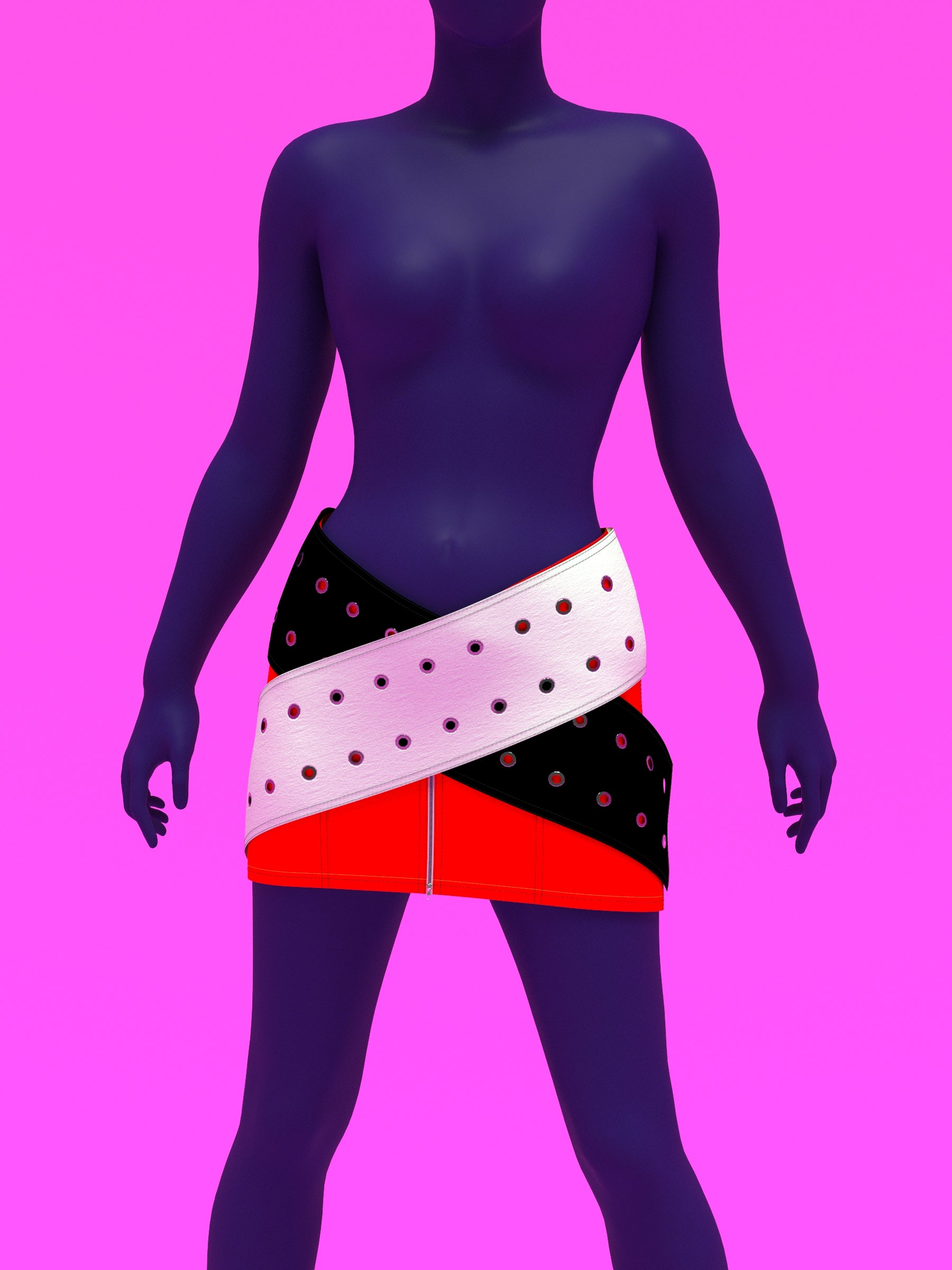
Aprende a coser una minifalda con cinturones cruzados extragrandes con este patrón de costura fácil de seguir. Diseñada con líneas de paneles limpias, detalles llamativos en los cinturones y un acabado pulido, esta falda es perfecta para looks impactantes del año 2000 y ropa deportiva. Fácil de usar y altamente personalizable, es ideal para crear una minifalda elegante y vanguardista con técnicas de confección profesionales.
Yardas de tela
La tabla de telas a continuación muestra el metraje sugerido para cada falda. Todas las estimaciones de metraje se basan en un ancho de tela de 54 a 58 pulgadas.
| Tamaño | Solo falda | Solo cinturones | Falda y cinturones |
|---|---|---|---|
| XS | 1 año | 1 año | 1 año |
| S | 1 año | 1 año | 1,25 años |
| METRO | 1 año | 1 año | 1,5 años |
| L | 1 año | 1 año | 1,5 años |
| SG | 1 año | 1 año | 1,5 años |
| 2XL | 1 año | 1 año | 1,5 años |
Telas y artículos de mercería
Tela
Adecuado para telas ligeras a medianas sin elasticidad, como mezclilla, satén, algodón, rayón o terciopelo.
Nociones
- Cremallera separadora para la parte delantera central (30 cm / 12 pulgadas)
- Herramienta para colocar ojales y arandelas
- Dos broches para asegurar los cinturones en su lugar
- Entretela fusible opcional para las correas
Detalles de tallas
Este patrón está diseñado en nuestras exclusivas tallas drag queen, desde la XS hasta la 2XL, para cuerpos con relleno y hombros, brazos y piernas más anchos. Aunque está diseñado pensando en drag, puede ser usado por personas de cualquier género que cumplan con las medidas que se indican a continuación.
| Tamaño | Pecho de hombre | Arrastre el pecho (acolchado) | Cintura de hombre | Cintura de arrastre (con corsé) | Cadera masculina | Arrastre de cadera (acolchado) | Altura |
|---|---|---|---|---|---|---|---|
| XS | 33-35 | 36-38 | 27,5-29,5 | 24.5-26.5 | 32,5-34,5 | 38-40 | 70 |
| S | 35-37 | 38-40 | 29,5-31,5 | 26,5-28,5 | 34,5-36,5 | 40-42 | 70 |
| METRO | 39-41 | 42-44 | 33,5-35,5 | 30,5-32,5 | 38,5-40,5 | 44-46 | 70 |
| L | 43-45 | 46-48 | 37,5-39,5 | 34,5-36,5 | 42-44 | 47,5-49,5 | 70 |
| SG | 47-49 | 50-52 | 42,5-44,5 | 39,5-41,5 | 45-47 | 50,5-52,5 | 70 |
| 2XL | 51-53 | 55-57 | 47,5-49,5 | 44,5-46,5 | 48-50 | 54.5-56.5 | 70 |
Instrucciones de costura
Color Guide

Fabric Pieces
This is a non-stretch mini skirt designed with oversized belts at the front. A lining is not required for this garment, but one may be added if desired.
After assembling your paper pattern pieces, use them to cut out your fabric. Once all pieces are cut, you should have the following components: four belt pieces cut as two mirrored sets, two mirrored center front pieces, two mirrored side front pieces, two mirrored side back pieces, two mirrored center back pieces, two mirrored front facings, and one back facing cut on the fold.

Sewing the Belts
Depending on your chosen fabric, you may wish to add interfacing to the belts for extra structure. To do this, fuse interfacing to the wrong side of one belt layer for each belt before assembling them.
Take two belt pieces and place them right sides together. Sew along the top curved edge and the bottom edges, leaving the angled side edge unsewn. Once sewn, turn the belt right side out and press the seams flat, then topstitch or edge stitch along the sewn edges for a clean finish. Repeat for the opposite belt.

Sewing the Skirt
Take the center front and side front pieces and place them right sides together. Sew along the edge marked with two notches using a straight stitch and a 1/2 inch seam allowance. Once sewn, serge the raw edges to finish.

Press the seam allowance toward the side seam, then topstitch to secure it in place.

Repeat this method for the opposite front pieces and the back peices.

Once the back pieces are assembled, stack the two back pieces right sides together and sew along the center back seam in the same manner. Serge the raw edges, press the seam, and topstitch to finish.

Attaching Belts
To connect the front and back of the skirt, the belts must be attached between the pieces first.

Place the front and back pieces right sides together, then insert the belt ends between them, positioning each belt starting 1/2 inch down from the top edge. Pin or clip all layers in place, then sew the side seam through all layers, enclosing the belt edge. Serge the seam, press it toward the back, and topstitch to secure. Then repeat for opposite belt.

Attaching Facings
Take the front facing and back facing pieces and place them right sides together. Sew the side seams and press the seam allowances open. Then serge the raw curved bottom edge of the entire facing, as this edge will remain visible on the inside of the garment.

Stack the facing and skirt with right sides facing each other and sew along the top edge. Turn the facing upward, press the seam allowance toward the facing, and understitch to secure it in place.

Installing the Zipper
Serge the center front edges

Add the zipper with right sides facing the right side of one center front edge, starting just below the facing. Sew the zipper in place.

Fold the facing toward over the zipper and the skirt with right sides together and sew the facing edge to the zipper tape. Repeat on the opposite side.

Turn the facing down inside the skirt. Press and topstitch along the top edge and the zipper.

Finishings
Hem the bottom edges of the skirt folding over twice at a half inch each.

Install the eyelets or rivets on the belts.

Install snaps on the belts and sides of the skirt to keep the belts in place. You can also use velcro, your instal large belt loops to this area.

Obtén el patrón